
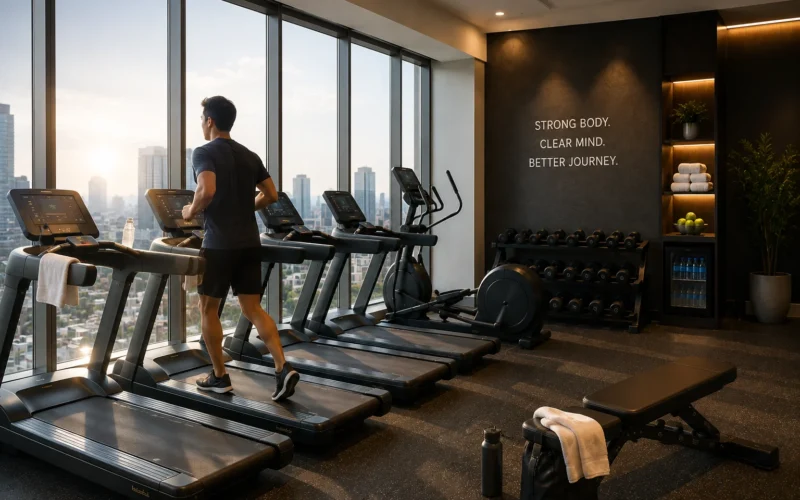
Traveling can completely change your normal routine. Meals may happen at different times, sleep schedules can shift, and a typical day can involve long hours on airplanes, trains, or buses. Even when a trip is filled with sightseeing and outdoor activities, travelers may find it difficult to maintain the exercise habits they follow at home.
One practical solution is to make use of the fitness facilities available at the hotel. Having a gym within the same property removes many of the barriers associated with exercising while traveling. There is no need to find a nearby fitness club, arrange transportation, or spend additional time commuting before and after a workout.
For travelers who value an active lifestyle, understanding the benefits of using a hotel gym can make it easier to maintain a healthy balance between exercise, relaxation, and exploration.
Why Exercise Becomes Difficult While Traveling
Travel naturally creates situations that can interrupt established fitness routines. Even travelers who exercise consistently at home may struggle to follow the same schedule once they arrive at a new destination.
Busy itineraries can reduce workout time
A typical vacation itinerary may include sightseeing, shopping, museums, restaurants, cultural attractions, and day trips. With so many activities competing for attention, exercise can easily become less important.
A hotel gym provides a convenient solution because it allows travelers to exercise without adding another destination to their schedule. A short session before breakfast or after returning from sightseeing may be enough to maintain consistency.
Long periods of sitting can affect how you feel
Travel often involves extended periods of sitting. Flights, train journeys, airport transfers, and car rides can leave travelers inactive for several hours.
Once they arrive at their destination, they may continue sitting during meals or while working. A short workout can provide an opportunity to move after these long periods of inactivity.
Exercise does not need to be intense to be useful. Walking on a treadmill, cycling, stretching, or performing basic resistance exercises can provide a change of pace.
The Convenience of a Hotel Gym
One of the biggest advantages of using a hotel gym is simply convenience. The facility is usually located within the same property as the guest room, making it easy to fit exercise into a busy schedule.
No commute is required
Traveling to an external gym can take more time than the workout itself. Guests need to find a suitable facility, determine how to get there, and potentially deal with unfamiliar membership or entry requirements.
A hotel gym eliminates most of these obstacles. Travelers can change into workout clothes, take the elevator or walk to the fitness area, complete their session, and return to their room.
This convenience can be particularly valuable during short trips when every hour of the itinerary matters.
Flexible timing
Hotel gyms may also provide greater flexibility than external fitness facilities. Depending on the property, guests may have access during early morning or late evening hours.
This makes it easier to exercise according to the day’s schedule rather than forcing the itinerary to revolve around a workout.
A traveler with an early sightseeing appointment can exercise before breakfast, while someone returning late from dinner may prefer a short session before going to bed.
Maintaining Consistency During a Trip
Fitness routines are often easier to maintain when they require minimal effort to organize. The hotel gym can become a simple part of the daily routine rather than a separate activity that requires extensive planning.
Create a realistic schedule
Travelers do not necessarily need to exercise every day. A realistic schedule might involve two or three short sessions during a week-long trip, depending on the itinerary and personal preferences.
The key is to create a routine that works with the trip instead of competing against it.
For example, a traveler might schedule workouts on quieter mornings and use sightseeing days as opportunities for natural movement.
Keep workouts familiar
Travel is usually not the ideal time to experiment with complicated training programs. Familiar exercises are easier to perform and require less time to organize.
A basic session can include several strength exercises, a short period of cardio, and some mobility work. The exact routine can be adjusted according to available equipment.
Keeping things simple can also reduce the temptation to skip exercise because the workout feels too difficult to organize.
Hotel Gyms Can Complement Active Sightseeing
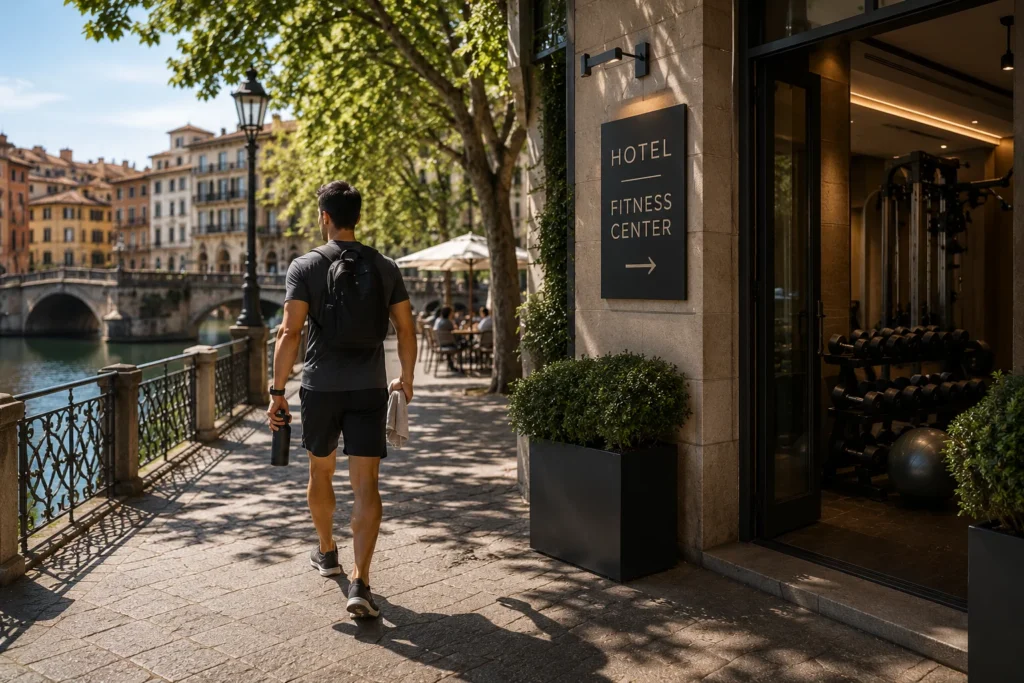
Sightseeing itself can involve a surprising amount of physical activity. Walking through city neighborhoods, climbing stairs, exploring parks, and visiting attractions can all contribute to daily movement.
A hotel gym does not necessarily need to replace these activities. Instead, it can complement them.
Walking can become part of the routine
Travelers often walk considerably more during a vacation than they do during an ordinary workday. Exploring a city on foot can provide a natural form of low-intensity activity.
After a long day of walking, however, travelers may prefer a lighter gym session focused on stretching, mobility, or gentle cardio rather than a demanding workout.
This approach allows exercise to adapt to what the body has already experienced during the day.
Balance structured and unstructured movement
Structured exercise and everyday movement serve different purposes. A gym provides controlled conditions for strength or cardio training, while sightseeing creates opportunities to move naturally throughout the day.
Combining both can make a trip more active without requiring an overly strict fitness schedule.
Benefits for Business Travelers
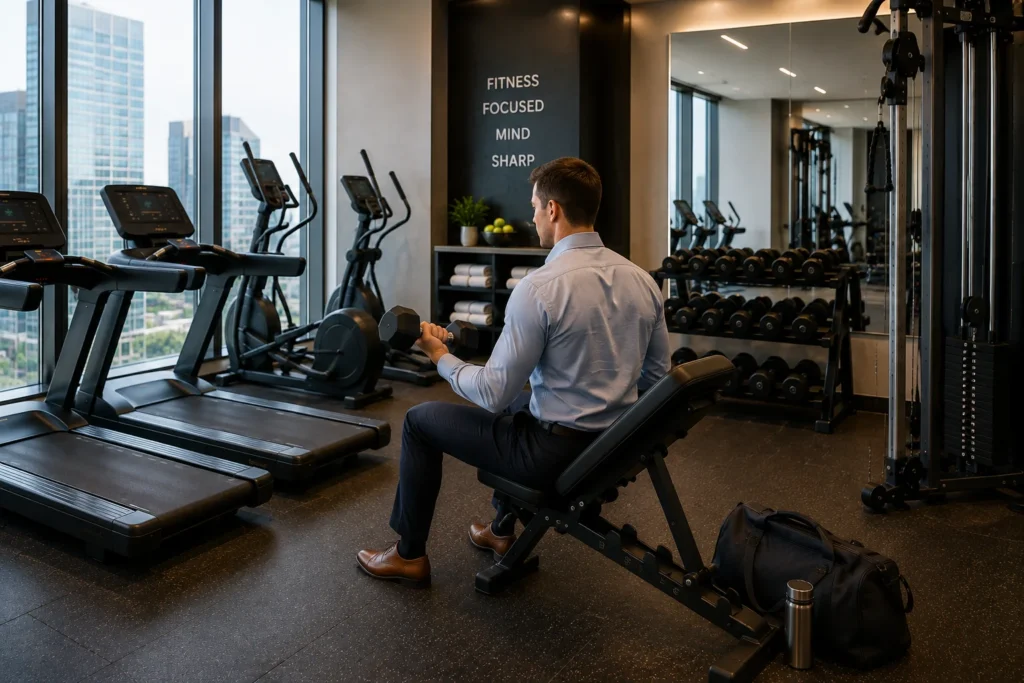
Business travelers can benefit significantly from hotel fitness facilities. Work trips often involve long meetings, conferences, flights, and irregular schedules.
Exercise can create a break from work
A short workout can provide a useful transition between professional responsibilities and personal time. Instead of moving directly from a meeting to dinner or returning to a hotel room, travelers can spend a short period exercising.
This change of environment can make the day feel less repetitive.
Convenient access saves valuable time
Business travelers often have limited free time. Traveling to an external gym may simply not be practical when meetings are scheduled throughout the day.
A hotel gym removes the transportation element, making short workouts much easier to fit into a demanding schedule.
Even a brief session can provide a welcome break from sitting at a desk or attending meetings.
Benefits for Leisure Travelers
Vacationers can also benefit from using hotel fitness facilities, although their reasons may be different.
Stay active without changing the itinerary
Leisure travelers generally want to maximize their time experiencing the destination. Spending a long period traveling to a gym may not be attractive.
A hotel fitness center allows them to exercise without significantly changing the day’s plans.
For example, a traveler can complete a short morning workout before heading out for sightseeing. Alternatively, they can use the gym after returning to the hotel before getting ready for dinner.
Support longer trips
The benefits can become even more noticeable during extended vacations. A traveler staying for one or two weeks may find it easier to maintain a sense of routine when there is a familiar place to exercise.
Having access to the same fitness environment each day can create a small sense of consistency even while everything else about the trip changes.
What to Do When the Hotel Gym Is Small
Not every hotel has a large fitness center. Some properties provide only a compact room with a treadmill, a few dumbbells, and limited space.
This does not necessarily make the facility useless.
Focus on adaptable exercises
A small gym can still support a simple workout. Bodyweight exercises, dumbbells, resistance movements, and cardio machines can often be combined into an effective short session.
The goal is not to recreate a full commercial gym. Instead, travelers can focus on movements that are possible with the equipment available.
Prioritize movement over perfection
Travel workouts do not have to perfectly match a normal training program. Maintaining some physical activity can be more realistic than trying to reproduce every aspect of a home routine.
A smaller facility may actually encourage travelers to keep workouts short and focused, which can work well with a busy itinerary.
Choosing a Hotel Based on Fitness Facilities
For travelers who consider exercise an important part of their lifestyle, gym facilities can become one of the factors to evaluate when selecting accommodation.
Check the available equipment
Before booking, travelers can review the hotel’s fitness information to determine whether the available equipment matches their needs.
Someone focused on cardio may prioritize treadmills and bikes, while another traveler may care more about free weights, resistance machines, or space for mobility exercises.
Consider opening hours
Operating hours are another important consideration. Early morning travelers should check whether the gym is available before their planned activities, while people with late schedules may prefer properties that provide extended access.
Look beyond the gym itself
Fitness can be part of a broader wellness experience. Some hotels combine gyms with pools, spas, saunas, relaxation areas, or other amenities.
Considering the complete wellness offering can help travelers choose a property that supports both activity and recovery.
A broader guide to hotel gym facilities can also help travelers understand which features are worth considering before making a booking.
Using a Hotel Gym Without Overtraining
Travel can already place physical demands on the body. Long walks, changes in sleep, unfamiliar activities, and extended transportation can all contribute to fatigue.
For that reason, travelers should avoid treating every hotel gym session as an opportunity for maximum performance.
Adjust the intensity
Workout intensity can be adapted according to energy levels and the activities planned for the day. A lighter session may be more appropriate after a long sightseeing day, while a more structured workout could fit better into a quieter morning.
Listening to the body can help prevent exercise from becoming another source of exhaustion.
Make recovery part of the routine
Rest is an important part of staying active. Travelers should allow time for sleep, hydration, meals, and relaxation rather than focusing exclusively on exercise.
A balanced trip can include active days, lighter movement, and complete rest days.
Hotel Gyms Can Improve the Overall Travel Experience
Exercise can become more than a fitness activity when it is integrated naturally into a trip. It can create structure, provide a break from sightseeing, and give travelers a familiar routine in an unfamiliar environment.
A familiar routine can provide stability
Travel introduces constant changes. New hotels, destinations, foods, transportation systems, and schedules can make each day feel different.
A short workout can provide one familiar element within that changing environment. Even a simple morning session can create a sense of routine before starting the day’s activities.
Exercise can complement relaxation
Staying active does not mean every day needs to be physically demanding. A balanced approach can combine exercise with relaxation.
After a workout, travelers might spend time resting, enjoying a meal, visiting a spa, or simply relaxing in their room. The goal is to make fitness part of the overall travel experience rather than allowing it to dominate the itinerary.
Tips for Making Hotel Gym Workouts Easier
A few simple habits can make it more likely that travelers will actually use the fitness facilities available at their hotel.
Pack workout clothes where they are easy to reach
Keeping workout clothing accessible can remove one small barrier to exercising. Travelers who have to unpack their entire suitcase before finding their shoes or clothes may be more likely to postpone a workout.
Set a modest goal
A simple goal such as completing a 20-minute workout can feel more achievable than committing to a long session.
Once travelers begin, they can decide whether they want to continue. Even when they do not, completing a short session can still provide useful movement.
Use the gym as an option, not an obligation
The purpose of a vacation is to enjoy the destination. Exercise should support that experience rather than become another source of pressure.
Some days may be perfect for a workout, while others may be better spent exploring, resting, or enjoying local food.
Conclusion
Using a hotel gym while traveling offers several practical benefits, especially for people who want to maintain an active lifestyle without sacrificing valuable travel time. The biggest advantage is convenience, but flexibility, consistency, and accessibility also make hotel fitness facilities useful.
Business travelers can use short workouts as a break from meetings, while leisure travelers can combine gym sessions with walking and sightseeing. Even small hotel gyms can provide enough equipment for simple workouts when expectations remain realistic.
The key is to approach travel fitness with flexibility. A successful routine does not require long workouts every day. Instead, it can involve short sessions, active sightseeing, adequate recovery, and a willingness to adapt to the conditions of each trip.
When exercise becomes an easy part of the accommodation experience, staying active while traveling becomes much more manageable—and can ultimately make the journey feel more balanced and enjoyable.